Wednesday, 2 March 2016

A Very Good Poem on Breakfast

Someone has rightly said that breakfast is the big deal of the day. We have already talked about the importance of breakfast for a healthy life.  Here is a very good poem on breakfast by Mary Lamb to further justify the need for a healthy breakfast. 


A dinner party, coffee, tea,
Sandwich, or supper, all may be
In their way pleasant. But to me
Not one of these deserves the praise
That welcomer of new-born days,
A breakfast, merits; ever giving
Cheerful notice we are living
Another day refreshed by sleep,
When its festival we keep.
Now although I would not slight
Those kindly words we use ‘Good night',
Yet parting words are words of sorrow,
And may not vie with sweet ‘Good Morrow',
With which again our friends we greet,
When in the breakfast-room we meet,
At the social table round,
Listening to the lively sound
Of those notes which never tire,
Of urn, or kettle on the fire.
Sleepy Robert never hears
Or urn, or kettle; he appears
When all have finished, one by one
Dropping off, and breakfast done.
Yet has he too his own pleasure,
His breakfast hour's his hour of leisure;
And, left alone, he reads or muses,
Or else in idle mood he uses
To sit and watch the venturous fly,
Where the sugar's piled high,
Clambering o'er the lumps so white,
Rocky cliffs of sweet delight.

Tuesday, 1 March 2016

Food Startups to Set up New Trends in Hotel Industry in Odisha

Eastern Indian state of Odisha, which was once infamous for its poor human development index, has now emerged as one of the most favored destinations for investment in the country. All major sectors like food processing, energy, textiles, IT and electronics are witnessing rapid growth, thus making the state to bag investment commitment of around Rs 709.59 billion this year.
There has been phenomenal growth in the information and technology sector in Odisha. It is evidence from that the fact that the state produces a good number of IT professionals for the nation. The capital city of Bhubaneswar is going to be the major IT hub in the country. It has topped the list of 20 Smart Cities followed by Pune and Jaipur coming second and third because of its assured water and electricity supply, sanitation and solid waste management, efficient urban mobility and public transport, affordable housing. Other parameters such as Robust IT connectivity, e-governance, safety and security of citizens and health, education and economic activities have also contributed the temple city to claim top position in the list.
Now the question arises – what would be impact of these developments on the traditional hotel industry in Odisha?

Odisha is famous for its typical cuisines and cooks. The hotel industry is one of the fastest growing industries in the state due to the rapid industrialization, growth in tourism and educational sector. According to unofficial estimate, there are more than 30,000 hotels including star hotels to low cost hotels. The number is constantly increasing. Catering to the needs of the customers, the hotel industry is adopting new strategies from time to time.
 The hotel industry in Odisha is fast catching up the online trends, which are already being experienced by the major cities like Mumbai, New Delhi, Bangalore and Hyderabad. In order to reach out masses, the hotels are coming up with different menus – a kind of pan-Indian menu and focusing on more efficient delivery platforms. They are trying to go hyper local in order to expand their customer base.  These developments have stimulated the role of technology in the food industry.

Technology has come a long way to play the role of facilitator in the hotel industry in Odisha. A number of food startups will soon come up in the state. The startups, mostly web-based delivery platforms will set new trends in the industry. No doubt, at present Bhubaneswar has been covered by the major global food delivery platforms. However, the city is not fully covered. And other towns and cities of the state are far away from this revolution. Days are not so far, when we see a good number of local startups will emerge to set new trends in the industry.

Typically a food delivery startup makes partnerships with different hotels and restaurants in the city.  It may also prefer foods in its own kitchen for the customers. It takes order both online and offline and delivers food to the customers. Everything is managed online.
In other words, the customers can views all hotel menus, discounts and offers at a single platform. They don't need to visit the store physically and can order sitting from home. Foods will be delivered in time.   How will the hotels get benefit from this new trend?


Food delivery startups will be of great help for low cost hotels and restaurants, who are often forced to downsize their expansion plans due to cost constraints. These small players can expand their business online, minimize marketing budget and optimize lean hiring.

Monday, 29 February 2016

Indian Government to Allow 100% FDI on Marketing Food Products


The Indian Government has decided to allow 100% FDI (foreign direct investment) on marketing of food products in made in India.
Finance Minister Arun Jaitley while presenting the Union Budget 2016-17 said that 100% FDI will be allowed through FIPB (Foreign Investment Promotion Board) route in marketing of food products produced and manufactured in India.
The decision will certainly benefit the farmers.  The move will also provide a boost to food processing industry in the country and generate new jobs, the minister said.
The move will enable any foreign multi-brand retailer who can procure food products made in India and market it by setting up stores.
 Other Announcements in Union Budget 2016-17 for Agricultural Sector and Farmers   
  •  28.5 lakh hectares will be brought under irrigation under the Pradhan Mantri Krishi Sinchai Yojana.
  •  A dedicated Long Term Irrigation Fund will be created in NABARD with an initial corpus of about Rs 20,000 crore. To achieve all these, a total provision of Rs 12,517 crore has been made through budgetary support and market borrowings in 2016-17.
  •  Simultaneously a major program for sustainable management of ground water resources has been prepared with an estimated cost of Rs 6,000 crore and proposed for multilateral funding.
  •  At least 5 lakh farm ponds and dug wells in rain fed areas and 10 lakh compost pits for production of organic manure will be taken up by making productive use of the allocations under MGNREGA.
  •  The Soil Health Card Scheme is now being implemented with greater vigour. Through this, farmers get information about nutrient level of the soil and can make judicious use of fertilizers. The target is to cover all 14 crore farm holdings by March 2017. Rs 368 crore has been provided for National Project on Soil Health and Fertility. Besides, 2,000 model retail outlets of Fertilizer companies will be provided with soil and seed testing facilities during the next three years. Fertilizer companies will also co-market city compost which increases the efficacy of chemical fertilizer. A policy for conversion of city waste into compost has also been approved by the Government under the Swachh Bharat Abhiyan.
  • To increase crop yields in rain fed areas, which account for nearly 55% of the country’s arable land, organic farming is being promoted. Towards this end, the Government has launched two important schemes. First, the ‘Parmparagat Krishi Vikas Yojana’ which will bring 5 lakh acres under organic farming over a three year period. Second, the Government has launched a value chain based organic farming scheme called “Organic Value Chain Development in North East Region”. The emphasis is on value addition so that organic produce grown in these parts find domestic and export markets. A total provision of Rs 412 crore has been made for these schemes.
  • Rs 500 crores under National Food Security Mission has been assigned to pulses. The number of districts covered has been increased to 622.
  • A national level competition will be held among 674 Krishi Vigyan Kendras with a total prize money of Rs 50 lakh to improve the efficiency and performance of these Kendras.
  • The Government is implementing the Unified Agriculture Marketing Scheme which envisages a common e-market platform that will be deployed in selected 585 regulated wholesale markets. Amendments to the APMC Acts of the States are a pre-requisite to join this e-platform.
  • The government allocated Rs 19,000 crore for Pradhan Mantri Gram Sadak Yojana in 2016-17.
  • Special focus has been given to ensure adequate and timely flow of credit to the farmers. Against the target of Rs 8.5 lakh crore in 2015-16, the target for agricultural credit in 2016-17 will be an all-time high of Rs 9 lakh crore. To reduce the burden of loan repayment on farmers, a provision of Rs 15,000 crore has been made in the BE 2016-17 towards interest subvention.
  • Government has approved the Crop Insurance Scheme, namely, Prime Minister Fasal Bima Yojana. For effective implementation of this Scheme, the govt has provided a sum of Rs 5,500 crore in the Budget 2016-17.


Friday, 26 February 2016

South Indian Food or North Indian Food – Taste Always Matters Most

Perhaps India is the only country in the world, where food is labeled as north Indian food, south Indian food, east Indian food and west Indian food etc. Can't we have a common food cutting across geographical boundaries?
Sometime the labeling is genuinely good and necessary because of the uniqueness and legacy of the food in a particular region. The labeling sometime causes divide instead of glorifying the diversity spirit of the country.

In the 21st century, we are living in a global village, where the geographical as well as culturally gap is fast narrowing and technology is setting new trends each passing day. It is the reality. And the reality is applicable to all spheres and segments including food.

Few years ago, a particular food is available in a particular region (read momo). Now the scenario has been changed. Someone sitting in a posh Delhi colony can get a wide variety of south Indian foods and someone traveling in Trivendrum can easily get any kind of north Indian food.

The factors like migration of labors, growth of educational sector particular set up of national educational institutes in states and rapid growth of technology have taken the food menus to different parts of the country cutting the geographical bounders. 

The samosa is a typical North Indian snack. These days it is common to get it in other parts of India as well. Similarly is the case of a popular south Indian dish – Dosa. One can get Dosa in any state of India.

Food without boundaries and regionalism is the encouraging order of the day. However, the fundamental difference in terms of taste, preference, and dieting is there.

One can smell the difference between south Indian and north Indian foods.  SouthIndian food is spicier than North Indian Food.  North Indian dishes always use tomatoes to bring the sour taste while South Indians use tamarind mostly.

Coconut milk is used in most South Indian curries. It is not at all used in north Indian curries.  North Indian cuisine is distinguished by the higher proportion-wise use of dairy products; milk, paneer, ghee (clarified butter), and yoghurt (yogurt) are all common ingredients, compared to that of southern India, where milk products, though consumed in large quantities, are usually used unaltered.  North Indian cooking features the use of the "tawa" (griddle) for baking flat breads like roti and paratha, and "tandoor"(a large and cylindrical coal-fired oven) for baking breads such as naan, kulcha and khakhra; main courses like tandoori chicken also cook in the tandoor.  

A similar comparison can be made between east and west Indian foods and between regions. Each food has its uniqueness and distinct taste. One can combine both north and south Indian menus in a meal.  It depends upon one's preference for taste. Tasty food is always preferable whether it is from north India or south India.

Thursday, 25 February 2016

Railway Budget Emphasizes Quality Food, Catering Services

Realizing catering an integral parameter for customer satisfaction, the Indian Government has introduced a slew of measures in its Railway Budget 2016-17 to achieve quality food and catering services.

Indian Railways, which operates world's largest railway network comprising 115,000 km of track over a route of 65,808 km and 7,112 stations and carrying over 23 million passengers daily, will provide quality food to its customers, said Railway Minister Suresh Prabhu while presenting the budget.

 As part of the measures, Indian Railway Catering and Tourism Corporation (IRCTC), a subsidiary of the Indian Railways, would begin to manage catering services in a phased manner. It would unbundle catering services by creating a distinction primarily between food preparation and food distribution.

The government is also planning to extend e-catering services from existing 45 large stations to all 408 ‘A-1’ and ‘A’ class stations, the minister said.

The Railway is also exploring the possibility of making mandatory catering services optional in trains, while local cuisine of choice will be made available to passengers, he further stated.

In order to ensure fresh and hygienic supply of foods on trains, the government is planning to add 10 more IRCTC operated, mechanized, sophisticated base kitchens in the rail network. It will also mandate third party audit in order to ensure desired level of quality in catering services.

 The Railways is also introducing a new policy of multi-purpose as against existing single purpose stalls at stations where each stall can provide multiple services required by passengers including milk products and OTC medicines.

 It is also exploring the feasibility of providing an option to the customers for drinking tea in kulhad (handle-less terracotta cup).


Wednesday, 24 February 2016

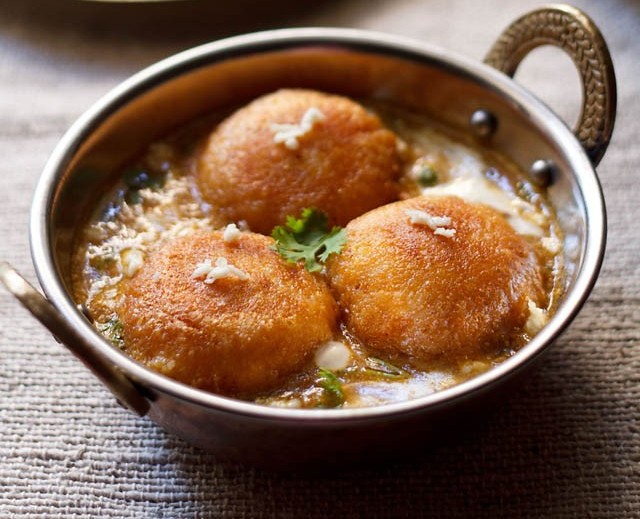
Malai Kofta: A Classic Mughlai Vegetarian Cuisine

The Mughal Empire was founded by Babur after defeating Ibrahim Lodi, the last ruler of the Delhi Sultanate in the First Battle of Panipat in 1526. The Mughals ruled over India till 1857.  The last Mughal emperor Bahadur Shah II was deposed by the British and exiled him to Rangoon(now known as Yangon, the capital city of  Myanmar) in 1857.  With this the Mughal empire came to an end in India. However, the Mughals have made immense contribution to Indian art, architecture, sculpture, and cusines.

The Mughlai cuisine has occupied a special place in the cuisine map o India. There are a wide range of Mughlai cuisines, which have been relished by the food lovers over the ages. Initially the cuisines were widely available in north Indian states. Now one can find Mughlai cuisines in any part of the country.   The tastes of Mughlai cuisine vary from extremely mild to spicy, and are often associated with a distinctive aroma and the taste of ground and whole spices.

 One such classic Mughlai vegetarian cuisine is Malai Kofta. Malai means cream. Koftas mean fried paneer and dumpling vegetables and creamy tomato gravy.  Malai Kofta is a tasty food item quite apt for parties and special occasions. It can be taken with roti, fried rice, jeera rice, chaptis. 

 The preparation of Malai Kofta is very simple. It takes less time. It can be made with different vegetables. Here is step by step guide how to make this food item.

Preparation Time: 10 minutes
Cooking Time: 30 minutes

How to Make  Malai Kofta Gravy
Ingredients
 Six large non-sour tomatoes  
Four medium onions
Six cashew nuts, (nuts to be soaked in water for 15 minutes to 20 minutes)
Two-inch piece of cinnamon
Two cloves
Half teaspoon cumin seeds
One tablespoon green chilli ginger paste (freshly made)
One teaspoon coriander powder
Half teaspoon red chilli Powder
Two teaspoons sugar
Salt to taste
Three tablespoons oil

Ingredients for Kofta:
 Three large potatoes (boiled, peeled and mashed)
Eight to ten cashew nuts, roughly chopped
Fourteen to sixteen golden raisins or black raisins (However, not necessary. You can take for added falvor)
One-fourth cup homemade fresh cream, freeze for 6 hours
Four tablespoons corn flour
Salt to taste
Oil for deep frying


Video Guide on Malai Kofta


Tuesday, 23 February 2016

Food Diversity: A Unique Feature of Indian Cuisine Tradition

The history of Indian cuisine is more than 5000 years old. It is globally famous for its rich diversity and high flavors. The food diversity is one of the cultural and regional identities of the people of India.
Indian cuisine signifies a variety of regional cuisines native to India. Due to the diversity in climate, soil type, religion, culture and ethnic groups, there is a significant diversity in cuisines. Each state is famous for its typical food. If we dig the history of Indian cuisine, it would be apparent that outsiders had also played a major role in framing food diversity in our country.

Years of Mughal rule had its tremendous influence on north Indian cuisines. Later, trade with British and Portuguese influence added to the already diverse Indian cuisine. In the modern era, with the rapid growth of science and technology, the sharing of cultures has become the new reality. The concept of global village has gained its momentum.  A considerable number of Indian settle in abroad and they bring back home with rich experience in all walks of life. Hence Indian cuisine has directly or indirectly influenced cuisines in other countries like US, UK, Sri Lanka, Australia and other countries across the world.

Most of the north Indian states consume lentils, vegetables, and roti as their staple food. North Indian states have a range of snacks, side-dishes and drinks such as mirchi bada, buknu, bhujiya, chaat, kachori, imarti, sharbat, aam panna and aam papad.

 Rice is the staple grain in Eastern India. The popular vegetable dishes of Orissa are Dalma and Santula. The most popular vegetable dish of Bengal is Sukto. Deep-fried, shallow-fried, and mashed vegetables are also very popular. Fish is frequently featured in a regular meal. East Indian cuisine is famous for its desserts, especially sweets such as rasagolla, chumchum, sandesh, rasabali, chhena poda, chhena gaja, and kheeri. Many of the sweet dishes now popular in Northern India initially originated in the Bengal and Orissa regions. Apart from sweets, East India cuisine offers delights made of posta.

Rice is also staple food in south Indian states. The unique feature of south Indian cuisine is sambar. Other typical foods include Rasam , a variety of pickles, dosa, poori, idli, vada, bonda, bajji and biryani.

Western Indian cuisine showcases a wider choice of vegetarian and non-vegetarian dishes. The cuisine in the western region is simple with dishes like alloo bhajis, karhi, dal batti and preparations polished off with rice and pooris.

The north eastern food items are very different from other parts of our country. The cuisines are  influenced by neighboring Burma and China. Typically the cuisines in this part of the country are comparatively less spicy.